

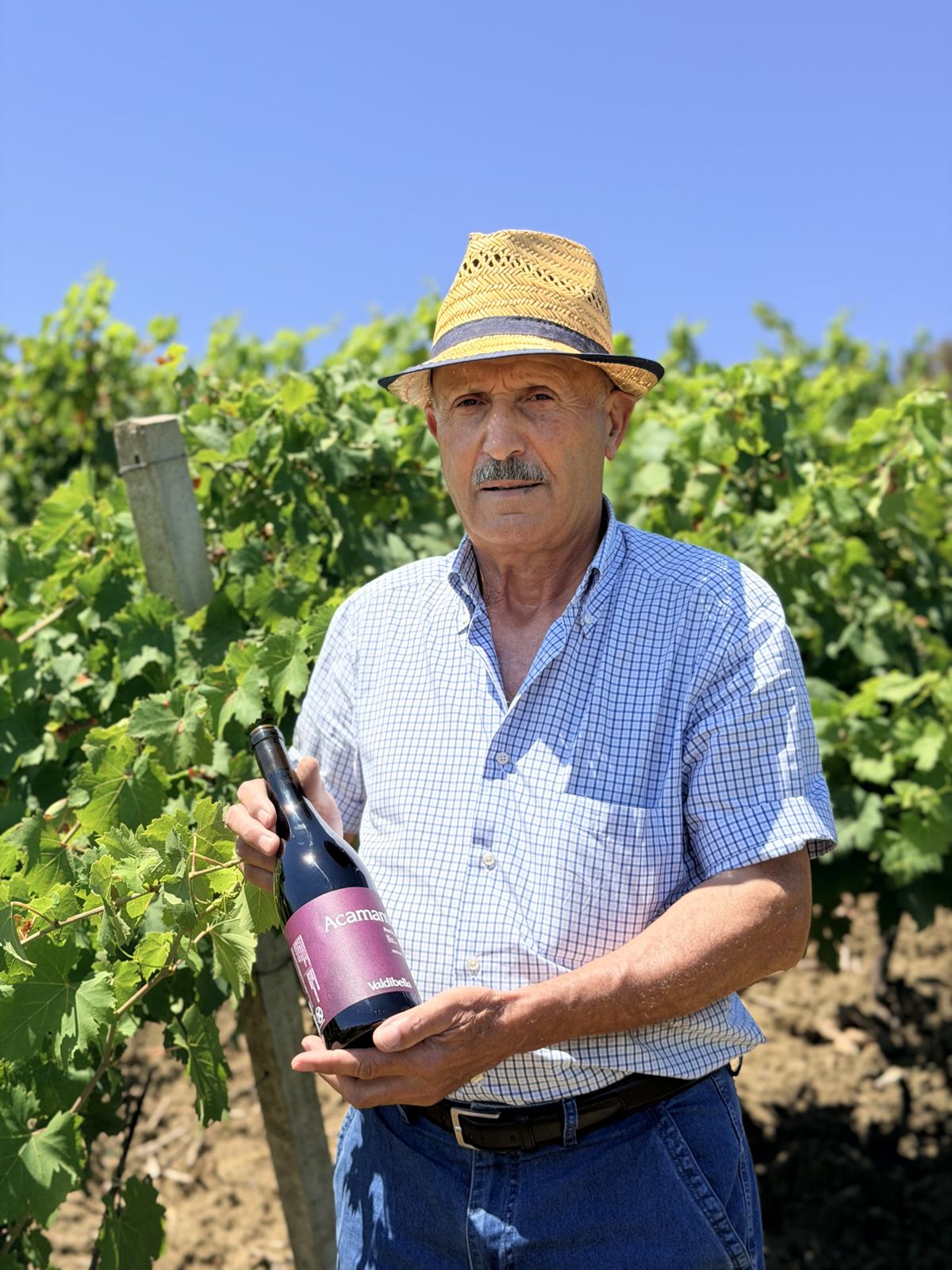
In myth, Acamas (Acamante in Italian) is an Achaean warrior who enters Troy on the night the city falls. While everything burns, he manages to carry the woman he loves and their child to safety. In the middle of war, he makes room for love and for what love creates.
We named our Perricone after him for two reasons. It’s one of the oldest varieties grown in our area, a thread that ties us to those who worked this land before us. And it’s a brave wine, with a personality that doesn’t go unnoticed.
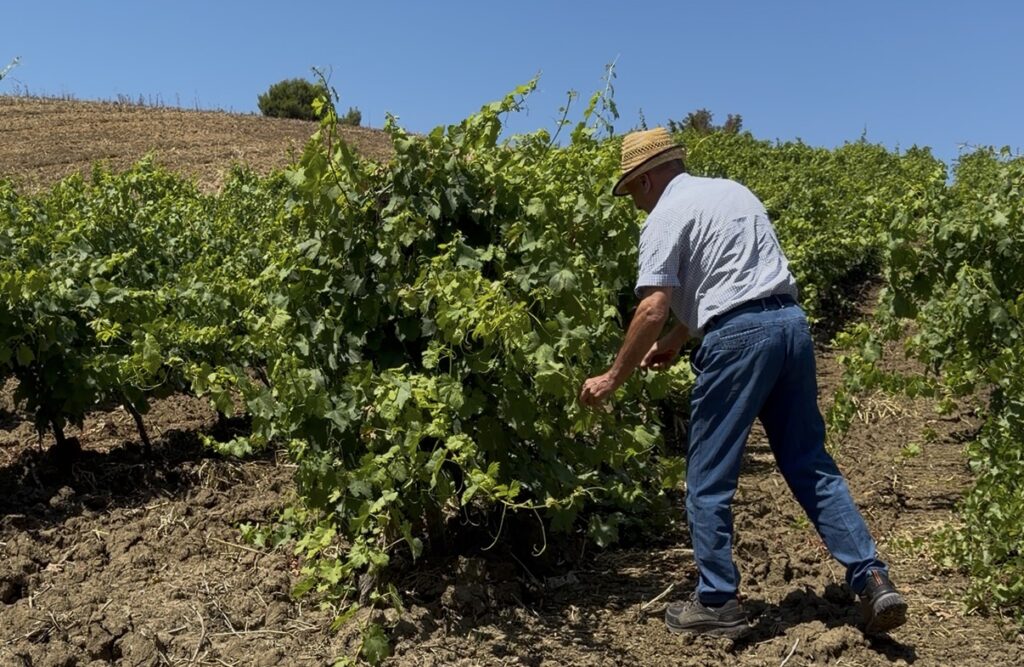
To understand where this character comes from, we went to its vineyard in Camporeale with Filippo Giglione, the cooperative member who farms it.
A young vineyard, with ten years of history already
The Acamante vineyard was planted between 2014 and 2016 and has just passed its tenth year. It sits at about 300 metres above sea level, on these hills inland from Palermo. It has never been a high-volume vineyard. Filippo puts it plainly: it produces little, but the grapes are good.
It’s farmed organically, using only the permitted treatments: copper and sulphur. In the coming months we’ll dig a few test pits between the rows to analyse the soil and better understand how it’s doing and what it needs.
A vintage that pays off
This year is going better than the last. The rain has brought new life to the soil, and the vineyard has felt it. Last year, instead, a pest, the leafhopper, stopped the grapes from ripening right in the final days, just when it all seemed done.
Rain, though, is only half an ally. Moisture helps as long as it passes. If it lingers too long, it brings disease. In the countryside you learn early on that the same sky can give and take away.
A grape in no hurry
Perricone ripens slowly and struggles to reach the right alcohol level. Grillo, by comparison, is picked about a month earlier, and that head start keeps it safe from end-of-season storms. With Perricone you have to wait, and hope the weather holds in the meantime.
Wild plants grow between the rows too. There’s wood sorrel, which nobody sowed: it spreads on its own underground, stays low and has small yellow flowers. We’re keeping it in check little by little.
From the vineyard to the bottle
The grapes are picked by hand into small crates. In the cellar they‘re destemmed but not crushed. Thirty-six hours earlier we prepare a starter with part of the must, left to begin fermenting on its own with its native yeasts, and add it to the grapes. For the first 24–48 hours fermentation proceeds with a still cap, at around 22 °C. Then pump-overs begin and continue until fermentation ends.
Maceration lasts 12–14 days. Then come racking and pressing of the pomace, and malolactic fermentation happens spontaneously. Acamante then rests 12 months in oak barrels and another 6 months in bottle before release.
In the glass
The colour is an intense purple-red. On the nose there’s mulberry and red fruit, with well-integrated spicy notes. On the palate it has a complex structure, soft tannins and a long finish. Serve between 16 and 18 °C.
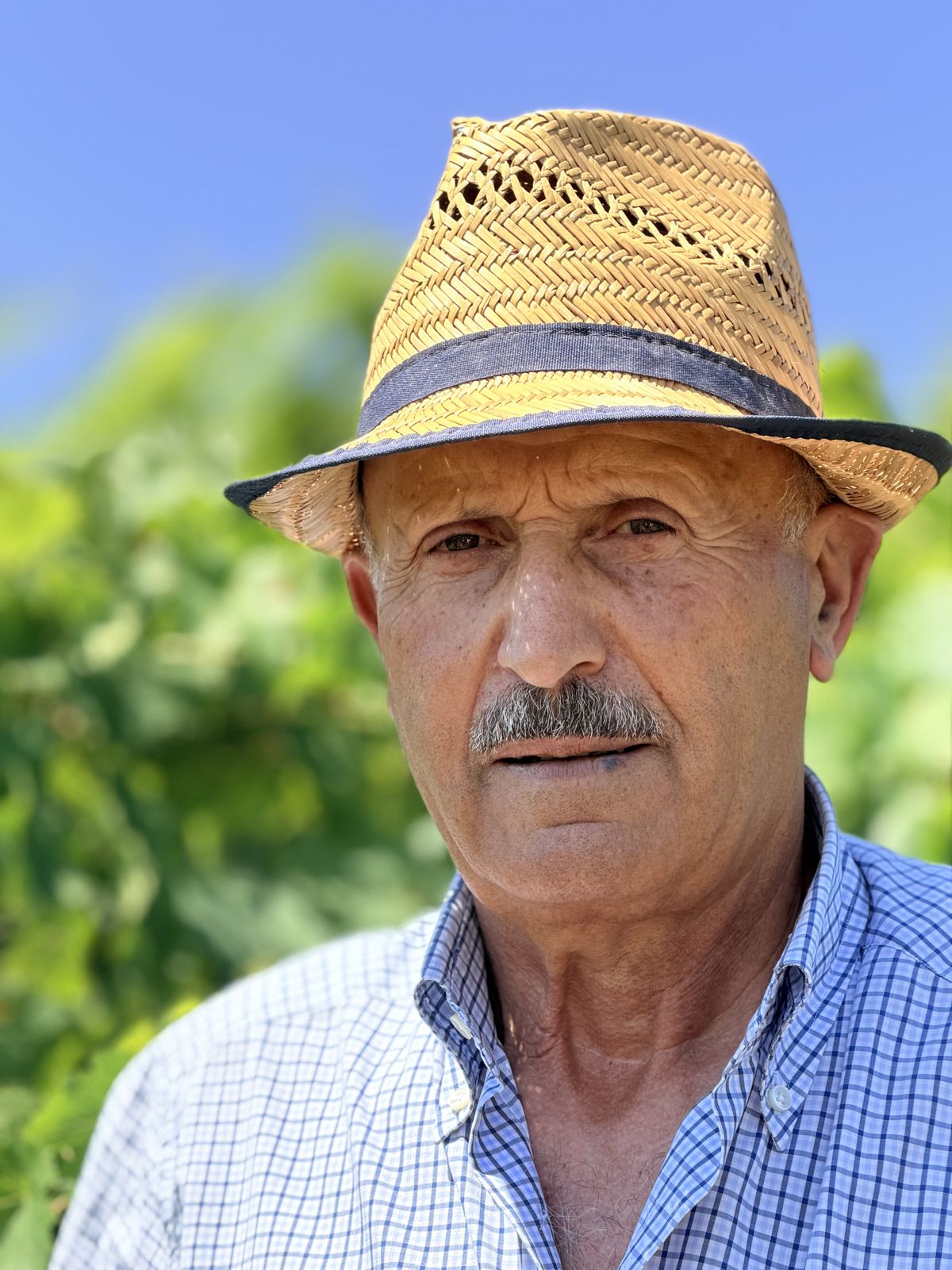
Country life, according to Filippo
We ask him what he likes most about this work. The answer comes straight away: being outdoors, when the day is fine. The hardest part is income, which depends on the vintage and so is never certain.
Filippo has worked the land full time since 2006. Today, with the years, he has slowed down. He adapts and gets help where he can, but the vineyard is still his. And every bottle of Acamante holds this too: the patience of someone who knows how to wait for a grape that’s in no hurry.
Acamante at a glance
- Grape: Perricone – Cru
- Appellation: IGP Terre Siciliane
- Area: Camporeale (Palermo), about 300 m above sea level
- Farming: organic, CSQA certified
- Harvest: by hand, in small crates
- Ageing: 12 months in oak barrels and 6 months in bottle
- Serving temperature: 16–18 °C
- Format: cases of 6 × 0.75 l bottles
To find out where to buy Acamante, write to us at commerciale@valdibella.com.
