

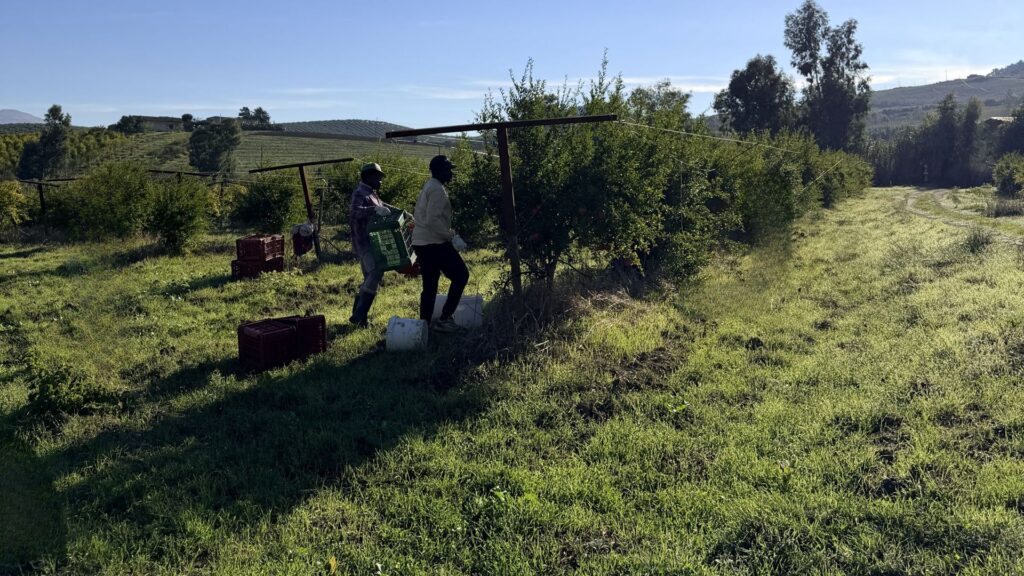
September in Sicily still feels like summer. The grass between the rows is dry, the sun is strong, and the fruit on the pomegranate trees has already taken its colour. It’s harvest time, so we went out to the field with Walter Pirri, who looks after the fruit and vegetable supply chains at Valdibella, to hear what lies behind a pomegranate. And inside it, too.
Two varieties, two characters
The first one we pick is Acco, a table pomegranate. It ripens in September, and the harvest runs from the beginning of the month to the first week of October. Its juice balances sweetness and bitterness, which is why it’s so good eaten as it is, seed by seed.
In the next row stands Wonderful, the latest-ripening of the varieties we grow. It gives more juice, but its taste leans towards bitter, so it’s less suited to eating fresh. Two trees side by side, two different ways of being a pomegranate.
A soil that does its own work
Our pomegranate orchards yield well. The credit goes first of all to the soil and the microclimate, which this tree loves. The rest comes from how we manage them: the ground isn’t tilled, it stays covered in grass, and the trees are also fed by cover crops.
Cover crops are plants that cover the soil. Some grow wild, some we sow ourselves. They keep moisture in the top layers of the soil and limit evaporation, which matters a lot in Sicily. Some of these plants also capture nitrogen from the air and give it back to the soil at the end of their cycle. We feed the soil, and the soil feeds the trees.
Today the landscape still looks like August. With the first cold days, everything between the rows will turn green.
From the tree to the juice
The best-looking pomegranates are sold as fresh fruit. The smaller or less regular ones, still perfectly good for processing, become our pomegranate juice: 100% fruit, with nothing added. Every bottle brings together the different varieties harvested over the season: the sweetness of Acco, the yield of Wonderful and a few others.
The value of an imperfect fruit
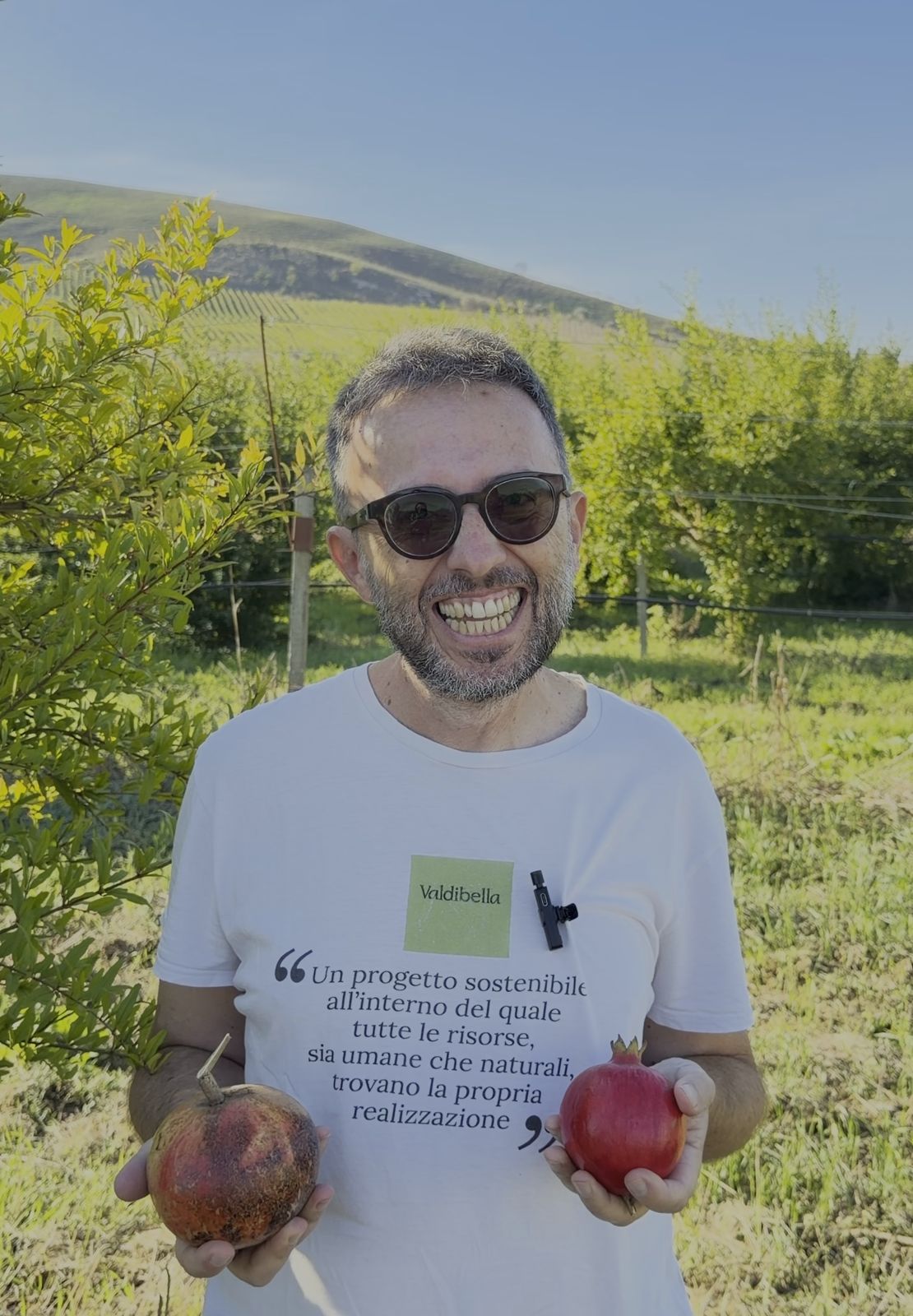
Walter opens one in front of us. The skin is marked with brown patches and spots, the memory of a very hot summer. Inside, the seeds are red, full and juicy. It has nothing less than a pomegranate with flawless skin.
Those marks come from the climate, but also from the way we farm. In natural agriculture we don’t push the plant towards maximum yield or flawless looks. The fruit comes in different sizes and shapes, and the quality stays high.
For a few years now this is exactly what we’ve been working on at Valdibella: giving value to fresh produce that isn’t cover-model material. It’s not just about avoiding waste. It’s a better way of using everything the land gives us.
A challenge we win together
The hardest part isn’t in the field. It’s helping people who buy to recognise the value of a less perfect fruit. We’ve been doing this for a long time through our participatory supply chains, together with the communities of customers in Northern Italy and abroad who follow our work closely.
Now we want to start again from here too, from our own area. At our logistics hub we’re setting up a shop where you’ll find our processed products and, above all, fresh produce, with special attention to the fruit that looks less perfect but tastes just as good.
Because a project like this only works if the people who eat are part of it. Every spotted pomegranate that ends up on a table is a pomegranate that has found its place.
Valdibella pomegranate juice is available from our retailers. For information, write to us at commerciale@valdibella.com.
