

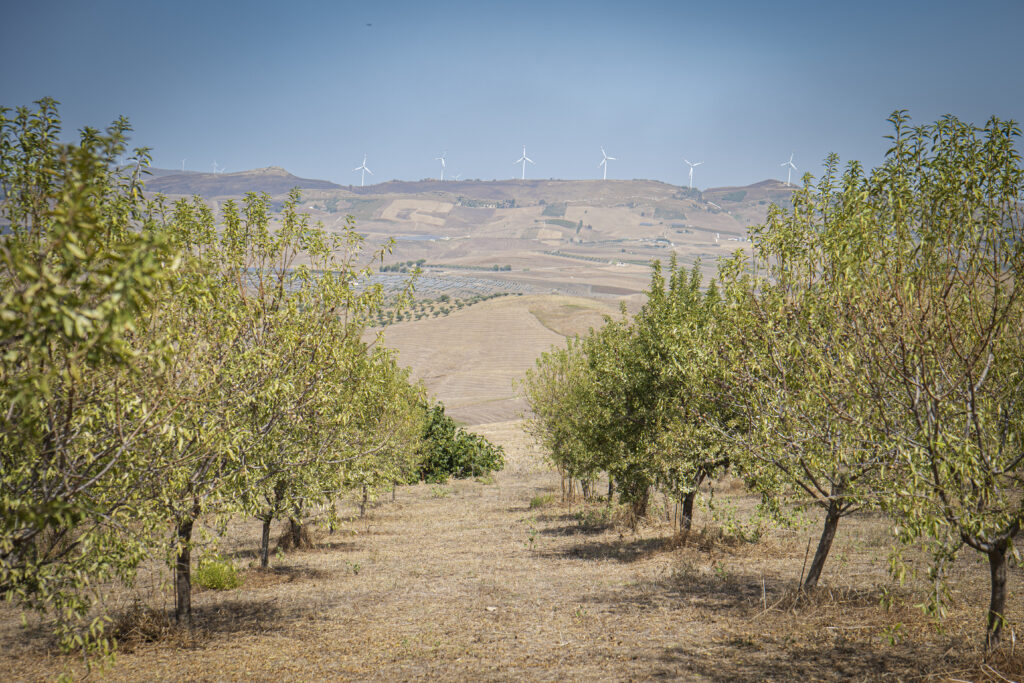
The Sicilian almond is far more than a simple nut. It’s a piece of the island’s history, arriving with the Greeks and Romans and flourishing further under the Arabs from the 9th century onward, and today it remains one of the most complete plant-based foods there is. In Camporeale we grow native varieties such as Pizzuta d’Avola, Fascionello, Romana, Chiricupara, Vinciatutti and Cavalera, and for the past few years we’ve also been studying it closely, together with the University of Florence, to understand just how far its nutritional potential can be pushed.
A plant made for this land
Before it’s a food, the almond is an agronomic choice. The almond tree flowers and buds as early as winter, when the soil still holds its water reserves, which lets it withstand Sicily’s hot, dry summers even with no irrigation at all. It’s a low-energy crop, perfectly suited to regenerative farming practices: on the land of the farms that work with us, it’s grown alongside oregano, rosemary, artichoke or fava beans, or rotated with green manure crops like sulla clover, which enrich the soil with organic matter. It’s also a melliferous plant, offering bees one of the few sources of forage available in the depths of winter. The result: soil protected from erosion, zero irrigation, zero phytosanitary treatments on our more established plots, and a fruit that is, by its very nature, already in balance with the land it grows on.
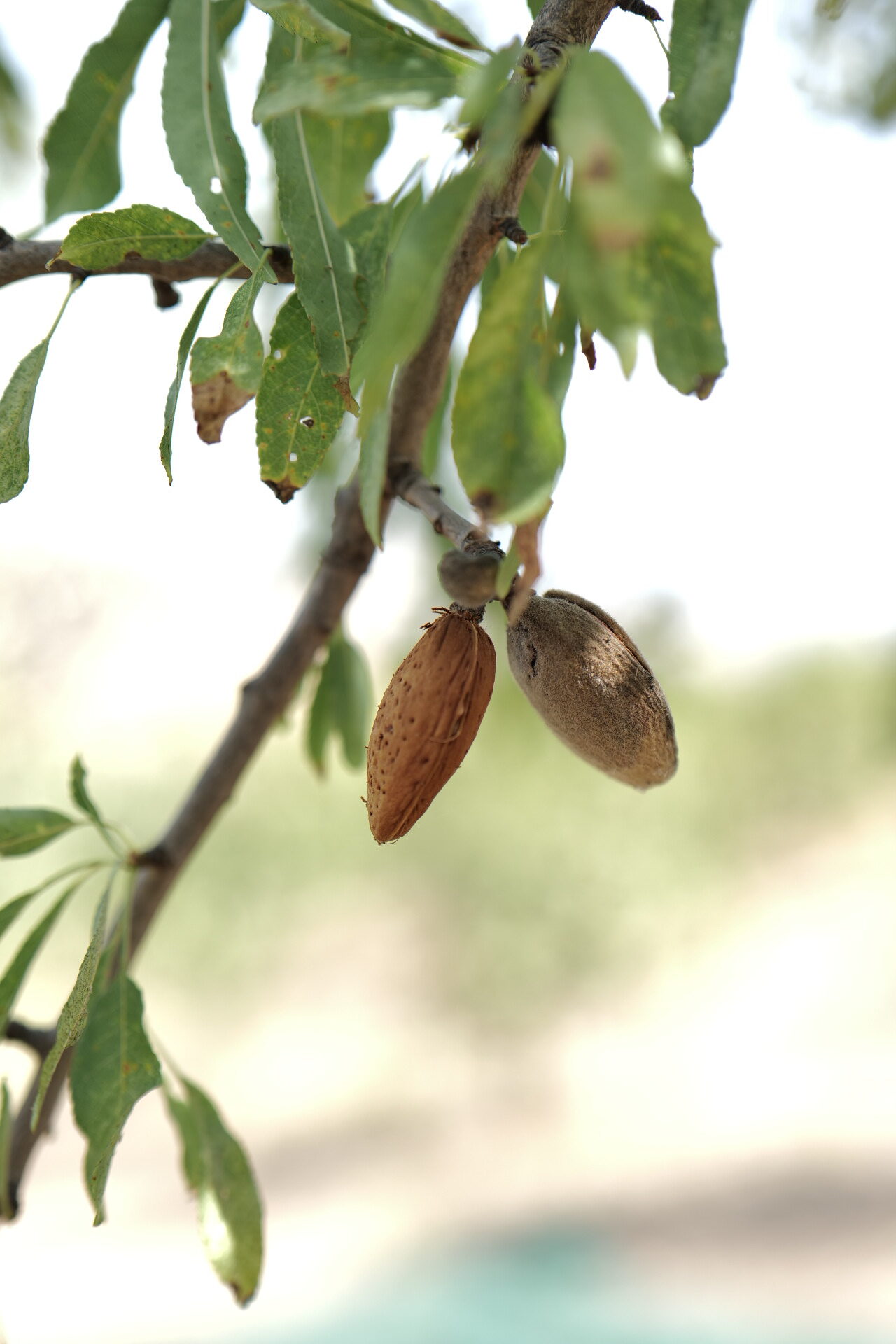
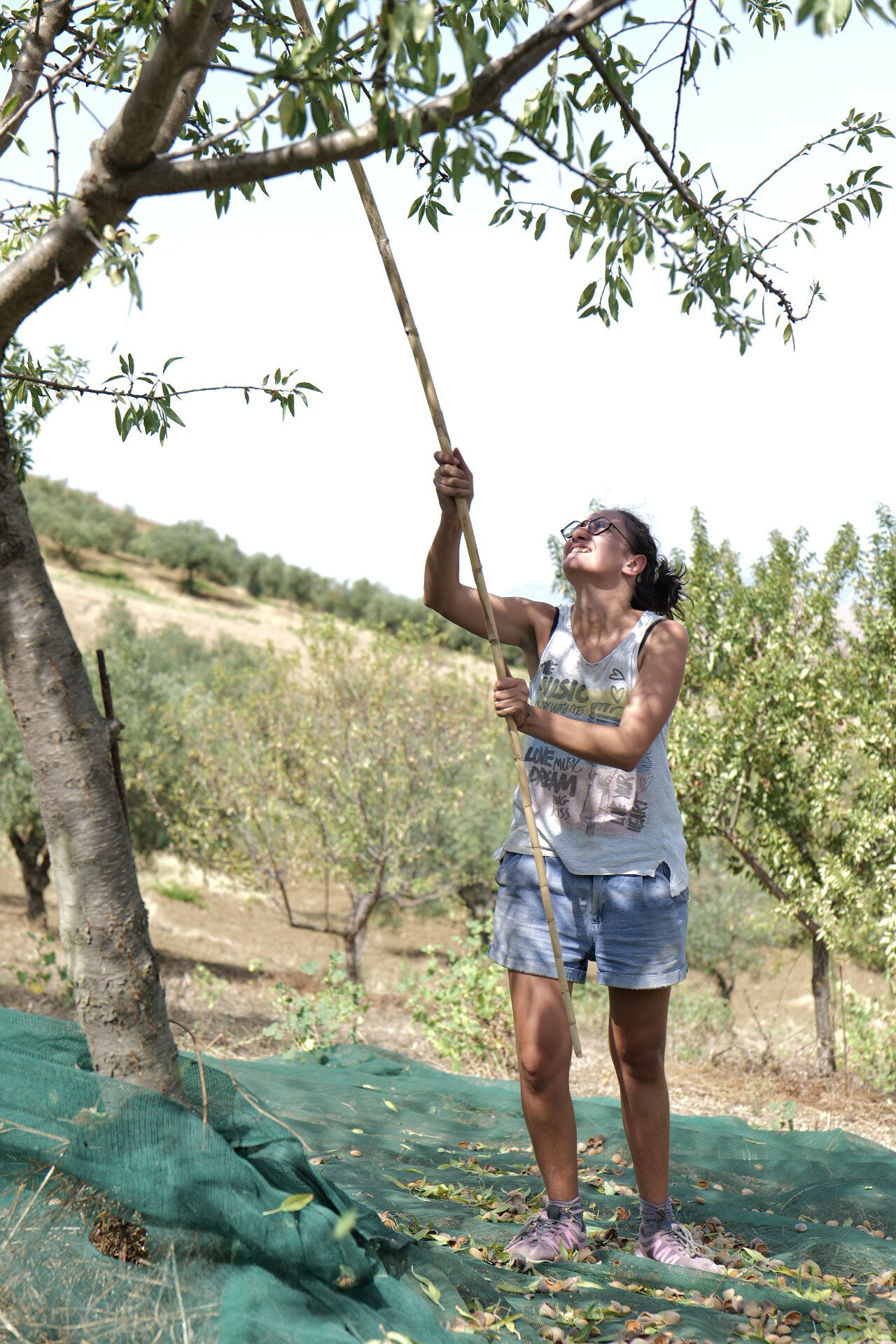
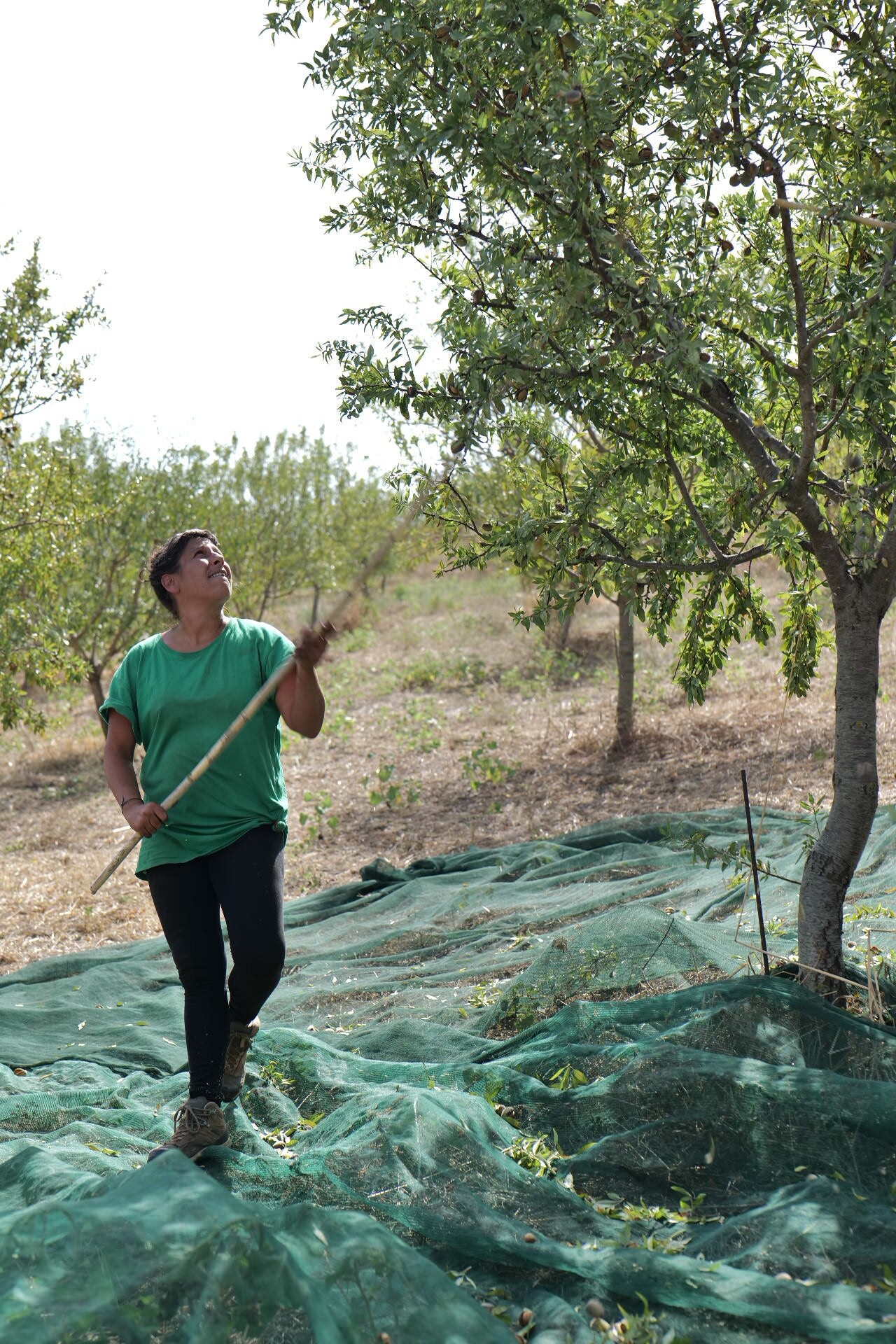
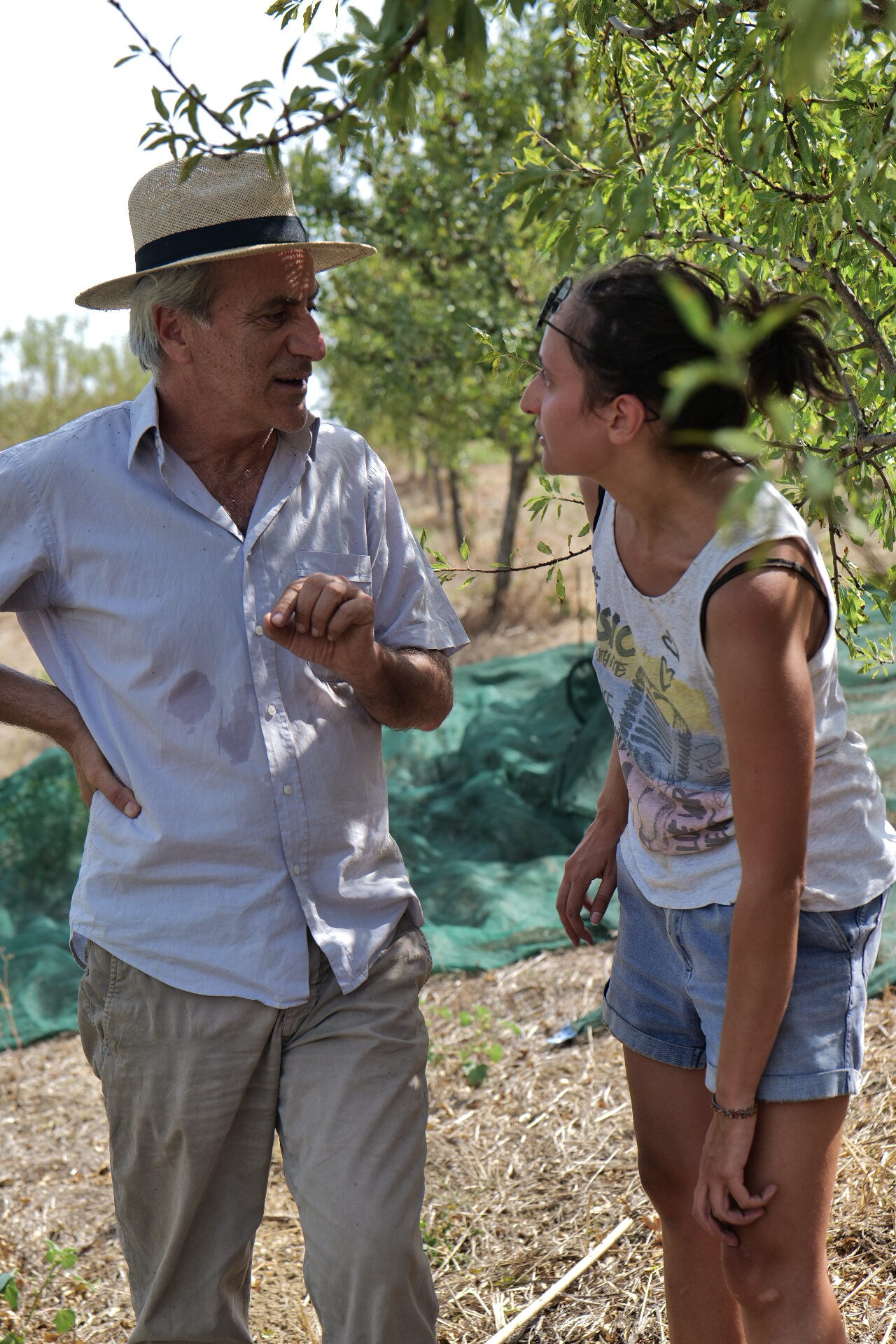
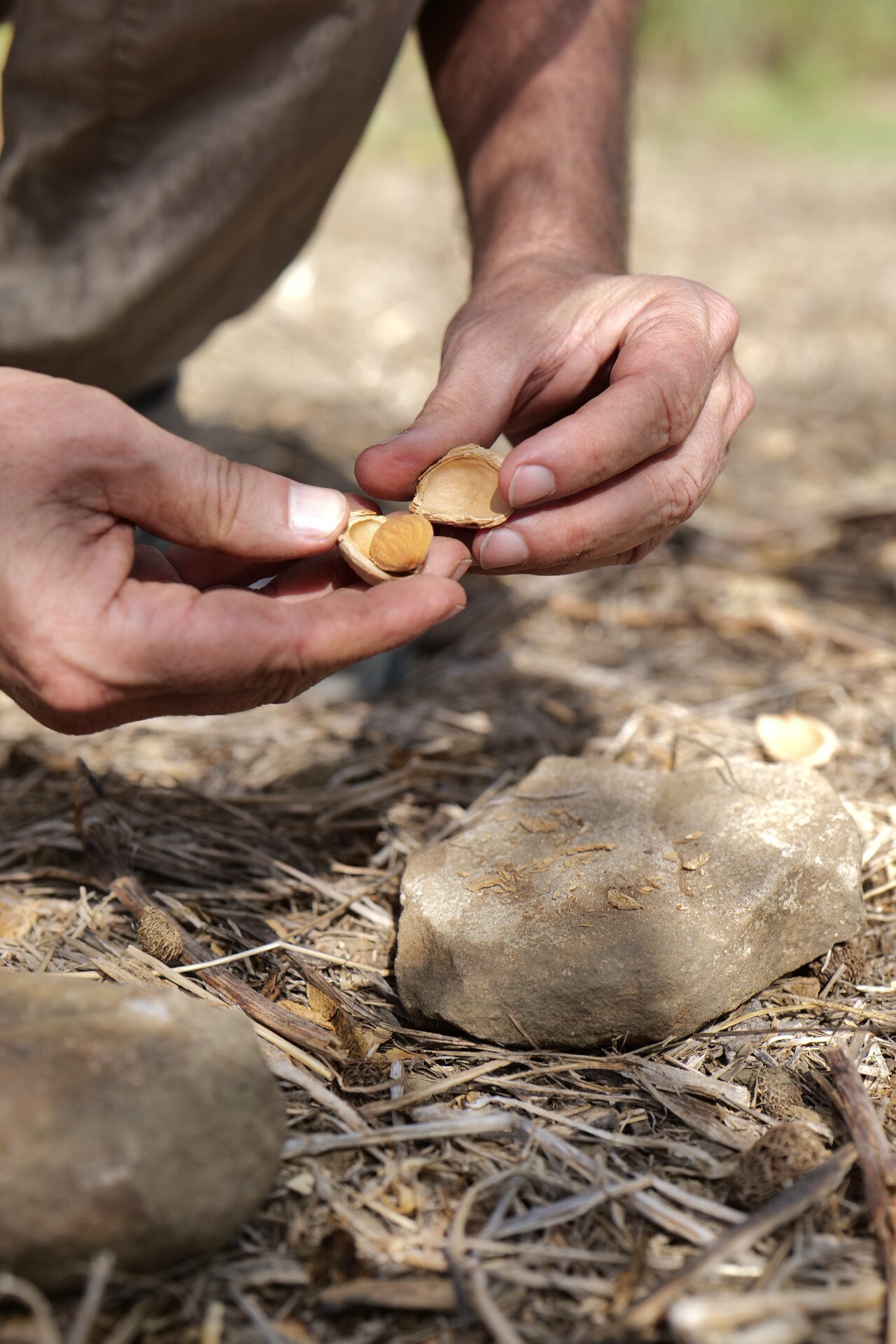
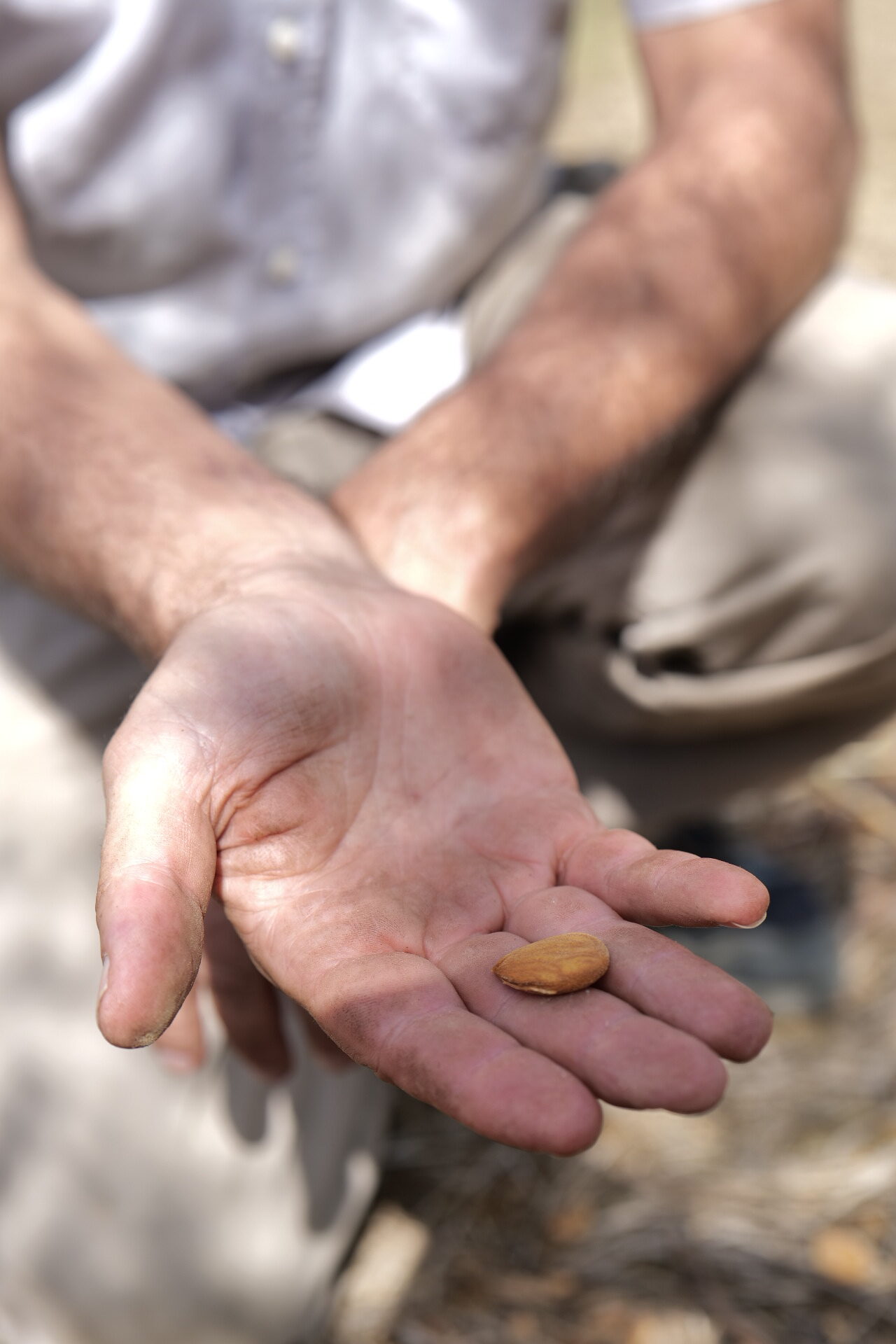
The almond harvest in Camporeale
What’s really inside an almond
Nutritionally, the almond is made up of roughly half fats, mostly monounsaturated fats like oleic acid, the same one found in olive oil, a quarter plant protein, and a further fifth complex carbohydrates, alongside fibre and bioactive micronutrients. It’s an excellent source of vitamin E, magnesium, calcium, iron, folic acid, niacin and riboflavin, with a calorie content that’s modest relative to its nutritional density, few available carbohydrates and little saturated fat. It also carries antioxidant and prebiotic properties, plus a cardiovascular protective role that numerous scientific studies now confirm.
In practical terms, this translates into documented benefits: almonds help lower LDL cholesterol, the “bad” kind, reducing cardiovascular risk thanks to their mono- and polyunsaturated fat content; they support more stable blood sugar levels, thanks to a low glycaemic index and high fibre content; they protect skin from free-radical damage, helping preserve its elasticity through vitamin E’s strong antioxidant power; they support gut function and a healthy bacterial flora, again thanks to their fibre content; and they help strengthen immune defences.
The BIOMA project: where tradition meets the lab
With all these qualities, you might think there was nothing left to discover. Yet this is exactly where the BIOMA project was born, an acronym for BIOlogico e MAndorla (“Organic and Almond”), carried out under Sicily’s Rural Development Programme (PSR) in collaboration with the NEUROFARBA Department of the University of Florence, which specialises in nutraceutical research.
The starting idea is as simple as it is fascinating: the “activated” almond, soaked and put through a controlled pre-germination process, could further enhance its properties, improving the bioavailability of vitamins and minerals, increasing protein digestibility, and reducing compounds like phytic acid, which normally limit the absorption of certain minerals. The process, developed entirely at low temperatures, below 42°C, to keep the almond a raw food, involves soaking in slightly acidified water, followed by a controlled-humidity resting phase and gentle drying.
The first data collected by the Florence researchers show an increase in calcium, vitamin B3 and vitamin E in activated almond samples compared with untreated ones. On other fronts, the research is more cautious: phytic acid content shows no significant difference yet, in the preliminary data, compared with untreated almonds, and a slight decrease in polyphenolic compounds was also observed in the activated samples, a finding the researchers are looking into further, along with the possible prebiotic effect of activated almond polysaccharides on the gut microbiota. Following the laboratory analyses, results were published and two seminars were held, one in Camporeale and one in Namur, Belgium, to share every step of the trial with people who work the land, just like we do.
A seed looking to the future
The activated Sicilian almond isn’t just a food: it’s a symbol of a different way of understanding agriculture, one that holds tradition, health, sustainability and research together. Thanks to the BIOMA project, this small seed is once again playing a leading role in our territory’s rural economy, with an eye firmly on the science and nutrition of tomorrow.
The almonds we grow in Camporeale also become, in our cooperative, almond milk and almond cream, designed to bring the same nutritional heritage we’ve told you about here to the table, in the simplest possible form. Come and discover Valdibella’s almond-based products: science, after all, is just another way of telling the story of what our land has always known how to do.
